


Where The Smoke Began
Henry Perry began selling barbecue in Kansas City.
Since 1908
Good barbecue. Great stories. More than a century of history.
01 · Where It All Began
Long before Kansas City became synonymous with barbecue, a man named Henry Perry was tending a smoky pit downtown.
It was 1908, and Perry was selling slow-smoked meats from a modest stand in Kansas City’s Garment District. For around 25 cents, customers could enjoy a generous helping of barbecue wrapped in newspaper.
Simple food. Big flavor.
Perry eventually established himself near the legendary 18th & Vine district, the center of Kansas City’s thriving Black community. This was a neighborhood where jazz filled the clubs, Black-owned businesses flourished, and entrepreneurs were building a culture that would help define the city.
Barbecue was part of that story.
One of Perry’s protégés was Charlie Bryant, who took over the business following Perry’s death in 1940. Another Perry-trained pitmaster, Arthur Pinkard, helped carry the tradition into what would become Gates Bar-B-Q.
Two legendary Kansas City barbecue institutions, both rooted in the work of the man widely remembered as the father of Kansas City barbecue.
And the story was just getting started.
Historical sources: Kansas City Black History — Henry Perry; The Kansas City Star — Kansas City Barbecue History.
02 · Arthur Makes It His Own
In 1946, Charlie Bryant retired, and his brother Arthur took over the family business.
Arthur had ideas.
He kept the slow-smoking traditions that made the barbecue famous but put his own stamp on the restaurant, especially the sauce.
The result was something distinctly Arthur Bryant’s: tangy, bold, vinegar-forward, and unlike the thick, sweet sauces that would eventually dominate much of the barbecue world.
Arthur also made a few practical improvements to the restaurant.
But fancy? Not a chance.
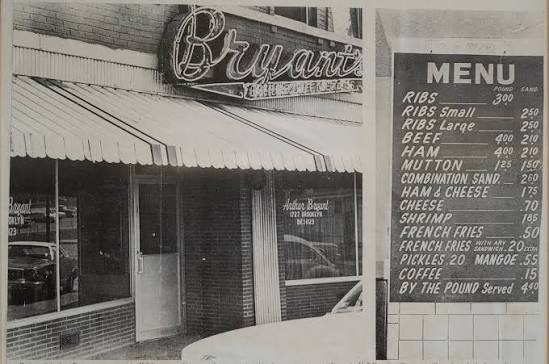
He wasn’t interested in plush booths, expensive decorations, or white tablecloths. A counter, some tables, good people, and great barbecue were all he needed.
“Barbecue King Eschews Decor—The Meat’s the Thing.”Kansas City Star, February 4, 1975
Arthur understood something that many restaurants spend years trying to figure out.
People weren’t coming for the furniture.
They were coming for the barbecue.
And they kept coming back.
03 · Barbecue, Baseball & Brooklyn Avenue
To understand Arthur Bryant’s, you have to understand the neighborhood.
Kansas City’s 18th & Vine district was more than an entertainment destination. It was a thriving center of Black business, music, culture, and community.
Jazz legends performed in nearby clubs. Families built businesses. Neighbors gathered around tables, and barbecue joints became places where people from every walk of life could share a meal.
And just down Brooklyn Avenue, baseball was making history.
At 22nd and Brooklyn stood Municipal Stadium, originally home to the Kansas City Blues and the legendary Kansas City Monarchs of the Negro Leagues.
The Monarchs were one of baseball’s greatest teams. Their roster included future Hall of Famers and pioneers such as Satchel Paige, Buck O’Neil, and Jackie Robinson.
When Major League Baseball arrived in 1955, the Kansas City Athletics moved into Municipal Stadium. The Kansas City Royals followed in 1969, while the Chiefs also called the stadium home during much of the 1960s.
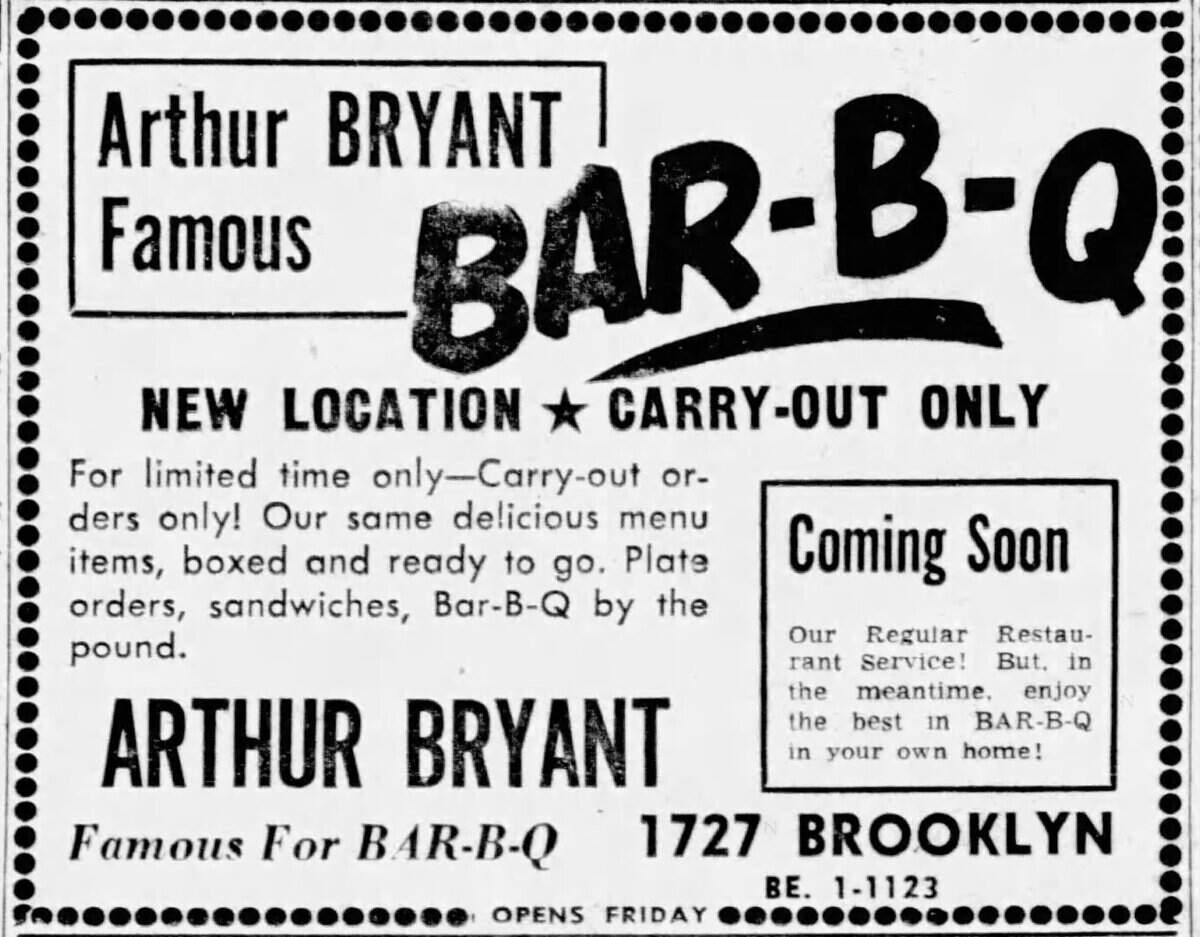
Arthur Bryant’s moved to its present location at 1727 Brooklyn Avenue in 1958, just a few blocks from the stadium.
It was a perfect fit.
Fans heading to games, players visiting town, and families looking for a good meal all found their way to Bryant’s.
The neighborhood changed. Teams came and went. The stadium eventually disappeared.
But Arthur Bryant’s remained.
And the smell of barbecue continued drifting down Brooklyn Avenue.
Fun fact: Municipal Stadium was home to the Monarchs, Athletics, Royals, and Chiefs at different points in its history.
Historical sources: African American Heritage Trail — Municipal Stadium; Missouri African American Heritage Study.
04 · The World Comes To Bryant’s
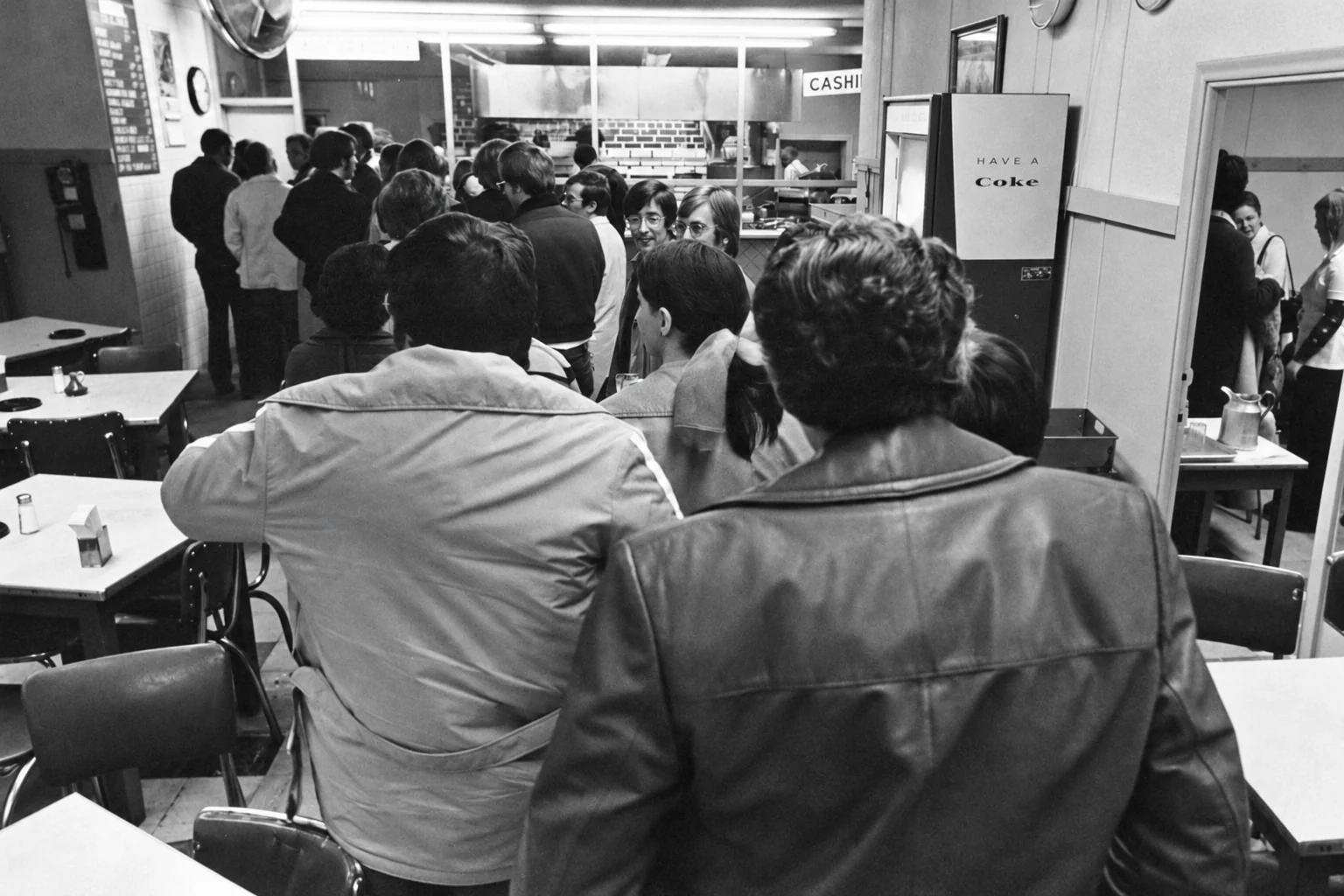
By the 1970s, Arthur Bryant’s had become much more than a neighborhood barbecue joint.
It was a destination.
And one Kansas City writer helped make sure the rest of the world knew about it.
Calvin Trillin, the celebrated writer and Kansas City native, was a devoted Bryant’s fan.
In 1972, he famously declared Arthur Bryant’s “the single best restaurant in the world.”
That’s quite an endorsement—especially for a place where sandwiches arrived on white bread, the sauce came in generous helpings, and nobody worried much about getting their hands dirty.
Burnt ends—those wonderfully smoky, crusty pieces of brisket that are now a Kansas City barbecue staple—weren’t always considered a delicacy.
At Bryant’s, the flavorful ends of smoked brisket were once set aside for customers to enjoy while waiting for their orders.
And they were free.
Trillin described the practice in his writing, helping bring attention to what would become one of Kansas City’s most famous foods. Arthur Bryant’s is widely credited with turning those once-overlooked pieces of brisket into a barbecue tradition.
In October 1979, Carter and First Lady Rosalynn Carter made an unexpected visit to Arthur Bryant’s.
According to newspaper accounts, White House staff had previously invited Arthur to meet the president during an earlier Kansas City appearance. Arthur reportedly declined. If the president wanted to meet Kansas City’s barbecue king, he’d have to come to the restaurant.
And eventually, that’s exactly what happened. On October 15, 1979, the president and first lady sat down for barbecue with Arthur Bryant himself.
Over the years, Arthur Bryant’s has welcomed presidents, professional athletes, entertainers, and countless visitors from around the world.
The famous people didn’t make Bryant’s legendary. They came because it already was.
Historical sources: Calvin Trillin’s 1970s writing; The Kansas City Star, October 15, 1979; Associated Press, October 16, 1979; KCUR — Kansas City Barbecue Legends.
A Sauce Worth Bringing
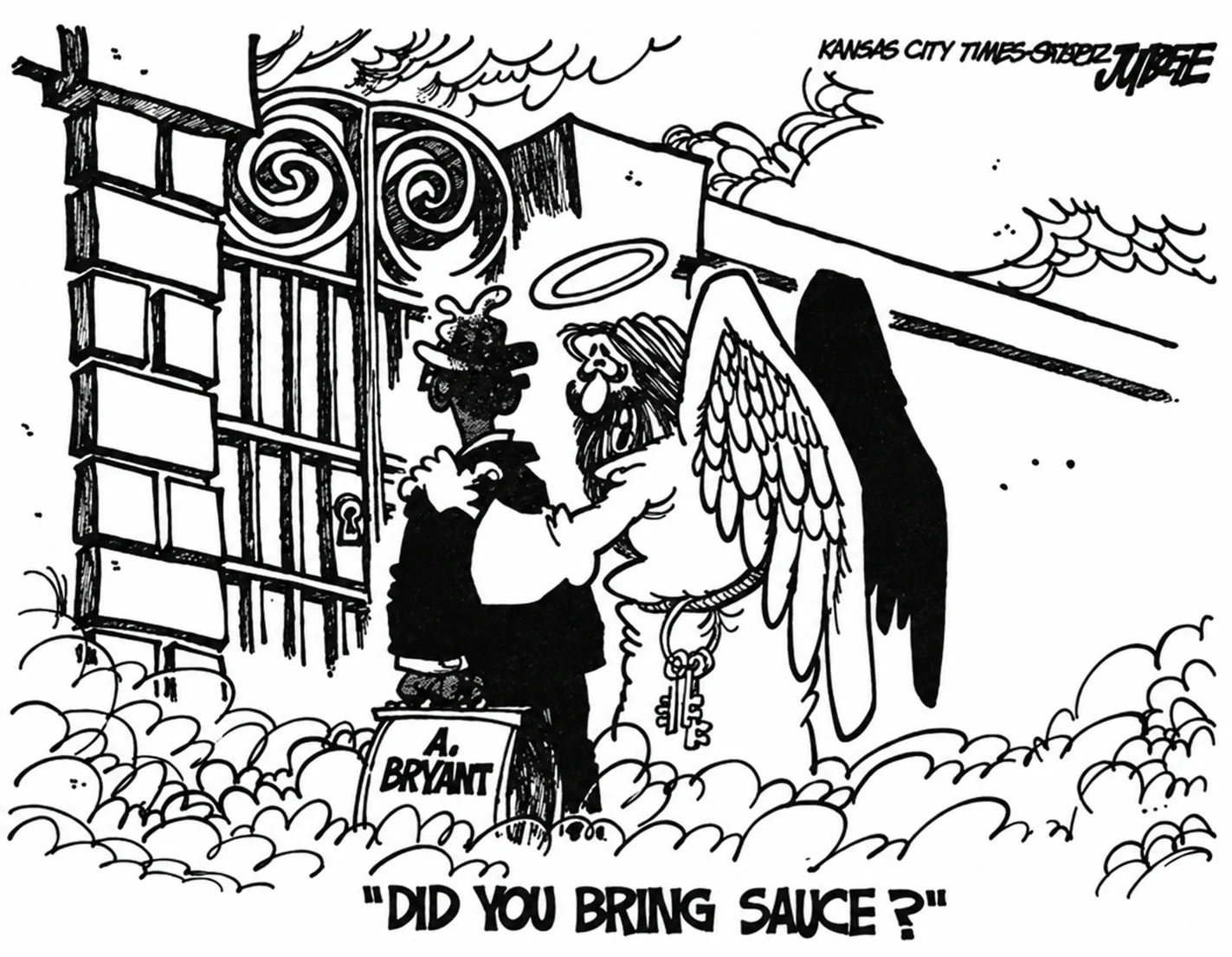
Arthur Bryant’s sauce was so distinctive that it became part of the legend. Tangy, bold, and generous, it was the kind of thing people talked about before they even took their first bite.
By the 1970s, the sauce had become shorthand for the Bryant’s experience: a bottle on the table, a little on the bread, and maybe a little on your hands.
05 · The Smoke Never Stops
Arthur Bryant passed away in 1982, but his legacy was already firmly established.
He helped turn a neighborhood barbecue operation into a restaurant known around the world. He preserved a tradition rooted in Kansas City’s Black community, developed a sauce unlike any other, and helped put Kansas City barbecue on the national map.
Most importantly, he created a place that belonged to Kansas City: a place where the food mattered more than the decorations, where customers stood in line alongside strangers who might become friends, and where generations of families shared meals and made memories.
Today, Arthur Bryant’s continues serving barbecue at 1727 Brooklyn Avenue, just as it has for generations.
The neighborhood has changed. Municipal Stadium is gone. Kansas City has grown into a major destination for barbecue lovers.
But the tradition that began with Henry Perry in 1908 lives on.
The smokers are still going. The sauce still has that unmistakable tang. And we’re still serving the barbecue that helped make Kansas City famous.
Some things are too good to change.
Little Bites Of Arthur Bryant’s History
Henry Perry began selling barbecue in Kansas City.
Arthur Bryant took over from his brother Charlie.
Bryant’s moved to 1727 Brooklyn.
Calvin Trillin called Arthur Bryant’s the best restaurant in the world.
Jimmy and Rosalynn Carter stopped by for lunch with Arthur Bryant.
Arthur Bryant passed away, leaving behind a celebrated Kansas City institution.
More than a century later, the Arthur Bryant’s tradition continues.